Curtains by Room
Best Curtains for Living Rooms in Kenya

Choose living-room curtains around daylight, privacy, furniture and everyday use. This practical guide explains fabrics, colours, layering, measurements and fitting.
The best living-room curtains are the ones that make your room comfortable to use, not simply the ones that look most impressive in a photograph. Your living room may be a place for watching television, welcoming visitors, working during the day or relaxing in the evening. Good curtains need to respond to those different activities while working with your furniture and the architecture of the room.
In Kenya, homes range from compact apartments with balcony doors to larger houses with several windows in one sitting room. There is no single fabric, colour or curtain length that is right for all of them. This guide helps you make a practical choice, beginning with light and privacy before moving to colour, fabric, heading and installation. Browse the curtain collection alongside these suggestions.
Decide what your living room needs most
Stand in the room at different times of day and note what is uncomfortable. Is afternoon light falling directly on the television? Can neighbours see through the window? Does the room feel dark even when the curtains are open? Are the current curtains difficult to move because they catch on furniture? These observations provide a better brief than choosing a colour first.
Rank your priorities. A room used mainly in the evening might need privacy and a warm decorative finish. A room that doubles as a daytime workspace may need softer daylight without becoming dim. A balcony opening used frequently needs curtains that slide easily and stack away from the doorway. The same product can work well in one setting and poorly in another.
Also decide how much visual attention the curtains should attract. They can be a quiet background, a soft layer around the windows or a prominent design feature. If the furniture, artwork and rug already compete for attention, a restrained curtain may create balance. If the room is otherwise simple, texture or a considered pattern can add character.
A versatile option: sheers behind main curtains
A two-layer arrangement is useful when you want different settings for different parts of the day. Keep the sheer across the window for filtered light, open both layers when you want a clearer view, and close the main curtains when you need a more substantial screen. Each layer should move independently rather than being permanently tied together.
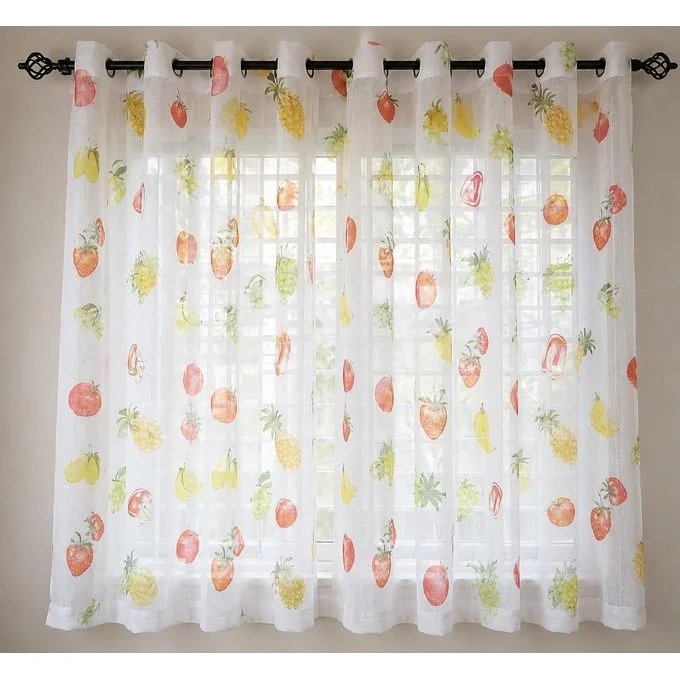
The Diani Breeze Sheer Curtains listing describes a lightweight voile layer for living and dining rooms. Treat that as an example of a light-filtering option, not a guarantee of privacy in every situation. Check a sample against your own window and assess the view from outside where it is safe and practical to do so.
Layering requires planning. You need a suitable double rod or separate tracks, enough clearance between the fabrics and adequate space for the curtains to gather when open. A heavy front curtain can press a sheer against the glass if the hardware is too shallow. Confirm the full arrangement before buying two attractive fabrics independently.
When light-reducing curtains are the better choice
If the living room receives uncomfortable direct light or strong television glare, consider a main curtain designed to reduce incoming light. This can give you more control at particular times of day. You do not necessarily need to keep it closed all day; a sheer behind it can provide a softer daytime setting.
Explore the blackout curtain collection and ask about the performance of the particular fabric. A blackout label should not be read as a promise of a completely dark room. Light can still enter above, below and beside the curtain or through a centre opening, and fabric specifications vary.
For example, Grey and Beige Textured Print Blackout Curtains offer a neutral patterned appearance alongside a light-reducing specification. Assess whether the pattern and fabric weight suit your room, and confirm the supplied dimensions. Dark colour alone is not a substitute for a suitable fabric construction and thoughtful fitting.
Choose colour by undertone, not by a small screen image
Look at the fixed elements first: flooring, wall colour, large furniture and any prominent timber or metal finishes. These are usually more expensive to change than cushions. A curtain that coordinates with these foundations will be easier to live with than one selected from an isolated trend photograph.
Neutral does not mean colourless. Beige may lean yellow, pink or grey; white may feel cool or creamy; grey can have blue, green or warmer undertones. Put a sample beside the wall and sofa in daylight and under the room's usual evening lighting. A combination that looks harmonious at midday can feel different under warm lamps.
You can choose a related neutral for a quiet scheme or repeat one colour from a rug or artwork for a stronger connection. Exact matching is optional. Aim for a deliberate relationship between the materials rather than buying several almost-matching shades that appear accidental when placed together.
Plain, textured or patterned curtains?
Plain curtains create a calm backdrop and are straightforward to coordinate with changing accessories. They are especially useful when the room already has a patterned sofa or rug. However, a plain fabric can still have a visible weave, a soft sheen or subtle tonal variation that gives it interest without introducing a large motif.
Textured curtains can add depth to a restrained room. View the sample both close up and from several steps away, because fine texture may disappear at a distance while strong texture can become more noticeable across a wide window. Consider how the fabric behaves in folds, not only how it looks laid flat.
Patterned curtains can work well when their scale suits the room and the other patterns are controlled. A large repeat may need additional material for alignment. Ask how the panels will be matched and where prominent motifs will fall. Do not assume that a small product photograph shows the full repeat or the appearance of a complete wall of curtains.
Get the proportions right
Curtains usually look more intentional when the supporting hardware and fabric coverage are planned together. The correct width should allow the curtains to close properly and form the intended folds. A narrow pair stretched flat across a wide opening often looks different from the gathered appearance shown in product photography.
As an illustration, twice fullness across a 2-metre track means about 4 metres of combined flat curtain width before construction allowances. This is not a universal rule or a cutting plan. The heading, fabric and desired appearance determine the actual fullness, and the seller should explain which measurement the supplied panel width represents.
Think about where the open curtains will sit. If they cover too much glass, the room may feel dim even when they are drawn back. Extra space beyond the opening can help in some installations, but the available wall area, adjacent furniture and support requirements must be assessed. Measure the intended installation rather than automatically using the glass width.
Choose a practical curtain drop
Floor-length curtains can give a living room a continuous, finished appearance, but the final drop needs to be deliberate. A small clearance above the floor can make movement and cleaning easier. A curtain that lightly touches the floor creates a different finish. Long fabric pooling on the floor may be attractive in a styled room but less convenient in a busy family space.
Check for uneven floors and measure at more than one point across a wide opening. The starting point depends on the heading and hardware: an eyelet curtain, a hooked curtain and a ceiling-track curtain are not measured in exactly the same way. Agree the finished-drop instruction with the maker before placing the order.
Where a window sits above furniture or close to a work surface, full-length fabric may not be practical. Consider the actual room layout rather than forcing one length everywhere. Curtains should not obstruct frequently used doors or rest against heat sources; follow any relevant equipment clearances and installation advice.
Select a heading that suits daily use
Eyelet headings can create regular folds and work with compatible rods, but the eyelet opening and rod diameter must suit one another. Check whether intermediate supports interfere with the movement you need. A wide opening is not simply a short-window arrangement made longer without any change in support planning.
Pleated or gathered headings can work with suitable hooks, rings or tracks, depending on the construction. Ask to see how the finished heading hangs and how much space the open curtain occupies. The choice affects appearance, fullness, hardware compatibility and sometimes the ease of removing the curtains for cleaning.
For living rooms used throughout the day, smooth operation matters as much as decorative detail. Try to avoid arrangements that require excessive pulling or awkward reaching. Ask the installer to demonstrate opening and closing after fitting and check that the centre closes neatly without one curtain dragging the other layer.
Rods and tracks should support the whole design
A visible decorative rod can connect with other finishes in the room, such as lighting, door handles or furniture legs. A discreet track can keep attention on the fabric. Neither is automatically better; choose the system that suits the heading, mounting surface, opening width and combined weight of the curtains.
The double curtain rod product is an option to discuss for layered curtains and sheers. If you prefer a less visible support system, review the curtain rails and tracks. Confirm the length, bracket arrangement, supplied accessories and compatibility rather than buying from appearance alone.
An appropriate installation includes suitable fixings for the wall or ceiling. Do not assume existing holes or brackets will support a heavier new curtain. Where drilling is required, the installer should assess the surface and avoid concealed services. In a rental, confirm any permission requirements before changing the mounting arrangement.

Plan for cleaning and family life
A living room is a working part of the home, so choose a fabric with care instructions you can realistically follow. Check whether the curtain is washable or needs professional cleaning, and whether the lining has separate requirements. Do not assume every polyester-looking fabric can be machine washed or every sheer can tolerate the same cycle.
Consider dust, pets, children and the frequency of door use. Fabric that repeatedly trails in a busy walkway may need more attention. Accessible tiebacks and hanging components should be installed with household safety in mind. Avoid creating loose loops or cords within children's reach, and follow the hardware supplier's safety instructions.
Keep a record of the fabric reference and care label. Test any recommended cleaning method cautiously and do not use strong products simply because they work on other household textiles. Curtains with coatings, linings, trims or mixed materials can react differently from an ordinary unlined cloth.
Compare complete costs, not just fabric prices
A useful budget includes the main curtains, sheers if required, lining, stitching, hardware, accessories, fitting and delivery. Product-listing prices do not necessarily include every component or your required dimensions. The 2026 curtain pricing guide explains how to compare those costs without confusing a panel price with a complete installed window.
Ask for two options based on the same measurements if you are deciding where to spend more. One might use a simpler fabric while the other adds texture or an extra layer. Keep the dimensions and installation scope fixed so the comparison remains useful. The best value is the combination that solves the room's actual needs reliably.
Three example living-room briefs
For a compact apartment, a restrained curtain colour, practical drop and independent sheer can preserve a sense of openness while allowing evening privacy. Check balcony-door clearance and where the fabric stacks. Avoid assuming that small rooms always require short curtains; the architecture and furniture placement are more useful guides.
For a television-focused sitting room, start with glare control and the direction of incoming light. Consider a light-reducing main curtain with enough coverage around the opening, then add a sheer if you want a softer daytime setting. Evaluate the result from the actual viewing position rather than standing beside the window.
For a formal reception room, a richer texture or considered pattern can become part of the decorative scheme. Coordinate the heading and hardware with that intention, but still check operation and care. A beautiful installation should not need constant rearranging to close properly or prevent fabric from dragging in a doorway.
Turn your ideas into a clear order
Gather room photographs, approximate dimensions, a description of the light and privacy problem, and examples of colours you like. Include whether the current rods or tracks will remain. Read the custom curtain guide if your windows need a tailored specification.
Then contact Curtains Kenya to confirm measuring, fabric options and installation requirements. Choose the curtains after those practical details are clear. The strongest living-room scheme is one where the fabric, colour, proportions and hardware work together, making the room comfortable in daylight and inviting after dark.
Helpful answers
Frequently asked questions
What are the best curtains for a living room in Kenya?
The best choice depends on the room. Sheers plus main curtains suit spaces needing flexible daylight and evening privacy. Consider light-reducing curtains where glare is a problem, and choose fabric and hardware for the actual window size.
Should living-room curtains match the sofa?
They do not need to match exactly. Coordinate their undertone and overall colour palette with the sofa, walls and floor. Repeating one accent colour can connect the room without making every fabric identical.
Can sheers provide privacy at night?
Do not rely on sheers alone at night. When the room is brighter than outside, silhouettes and interior details may be visible. Add a suitable opaque main curtain if night-time privacy matters.
Are blackout curtains suitable for living rooms?
They can be useful for strong incoming light or television glare. Combine them with a sheer if you also want filtered daylight. The final result depends on fabric performance and coverage around the window.
Should living-room curtains touch the floor?
Choose the drop to suit the room and cleaning needs. Curtains can finish just above the floor or lightly touch it, but doors, furniture and uneven floors must be considered. Confirm the measurement from the actual hanging point.
How do I choose between a rod and a rail?
Match the hardware to the heading, fabric weight and installation. Rods offer a visible decorative finish and can suit compatible eyelets. Tracks use appropriate hooks and gliders and provide a more discreet appearance.