
Curtain Installation & Measurement
Curtain Rails vs Curtain Rods: Which Is Better?
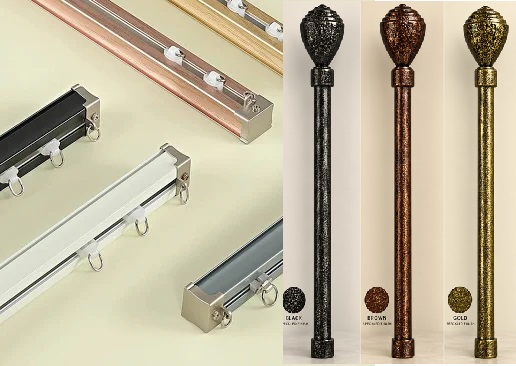
Choose between curtain rails and rods by comparing your curtain heading, window shape, fabric weight and preferred finish—not just the hardware price.
The best curtain support is the one that works with your curtain and window. A decorative rod can be the finishing detail that connects a room, while a discreet rail can allow the fabric to take centre stage. Both can give an attractive result. Problems usually begin when hardware is selected independently of the heading, measurements and installation conditions.
If you are comparing curtain rails versus curtain rods in Kenya, start with the complete window treatment rather than a photograph of a pole or track. This guide explains the practical differences, the questions to ask and how to compare costs fairly. You can browse Curtains Kenya accessories while deciding which arrangement suits your space.
The short answer: choose by heading and installation
Choose a rod when you want a visible decorative support and a compatible eyelet or ring-based curtain. Consider a rail when you prefer a less prominent support system and curtains designed to connect through suitable hooks and gliders. These are starting points, not rules that replace checking the actual product.
For a wide opening, unusual window shape or layered arrangement, movement and support become especially important. Explain whether the curtain should open from the centre, move to one side or travel around a corner. The supplier can then assess an appropriate system rather than trying to adapt unsuitable hardware after it has been purchased.
Question | Curtain rod | Curtain rail or track |
|---|---|---|
Visual effect | Usually visible, often with decorative finials | Often more discreet, depending on mounting |
Curtain connection | Compatible eyelets, rings or other approved headings | Compatible hooks and gliders |
Two layers | Suitable double-rod arrangement | Separate or suitable multi-track arrangement |
Curved windows | Requires an appropriate specialist system | Requires a track designed for the necessary bends |
Final cost | Depends on the complete specification | Depends on the complete specification |
What is a curtain rod?
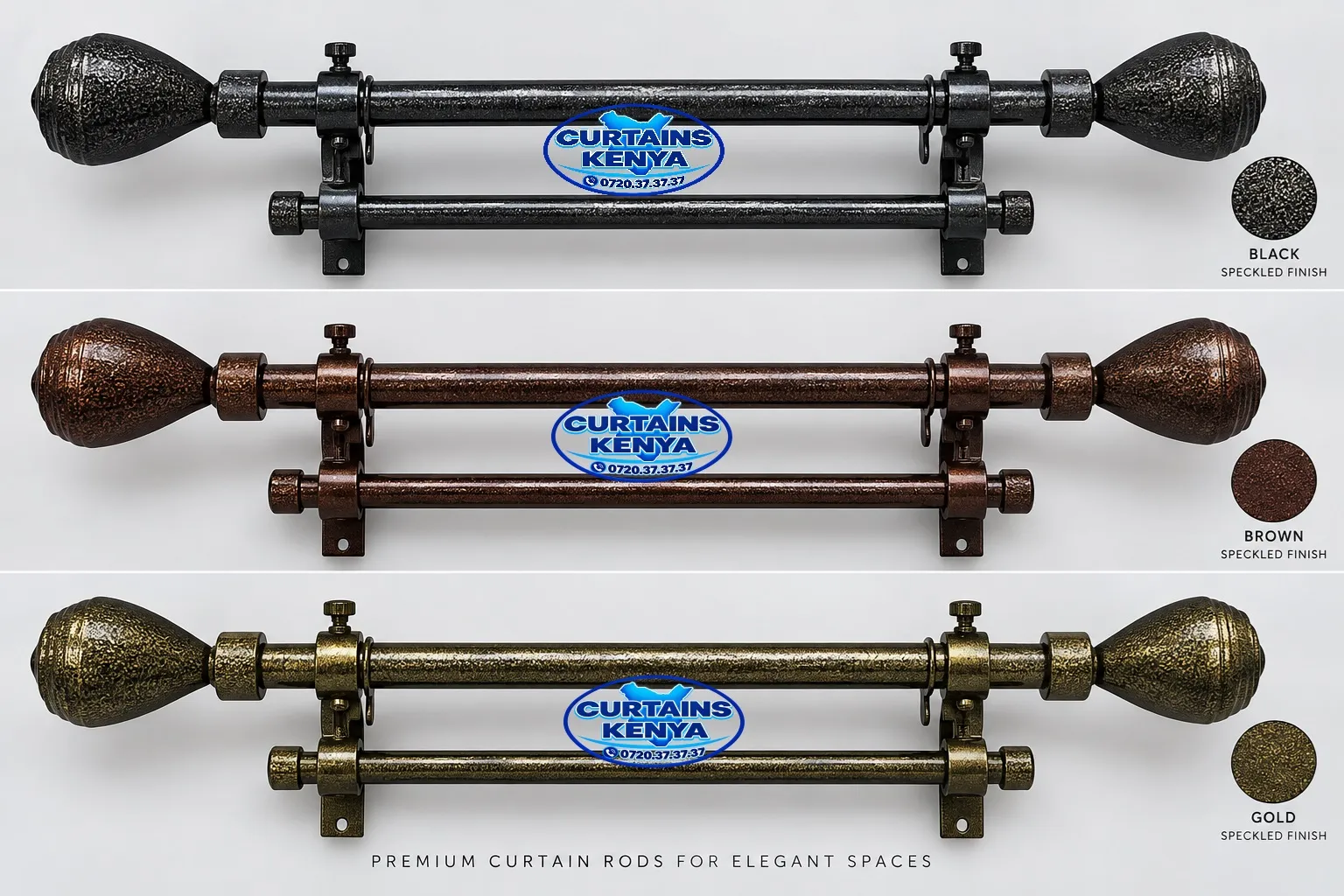
A rod, sometimes called a pole, is a support over which suitable eyelets or rings move. Decorative ends called finials may finish the installation. The rod, brackets, rings where required and wall fixings all form part of the system. Their compatibility matters more than simply finding a colour you like.
Rods can work well where visible hardware is part of the room's design. A dark finish can define the top of a window; a warmer metallic finish can coordinate with lamps or furniture handles. Check the finish in the room where possible, because photographs may not reproduce the exact colour or sheen.
The Premium Double Curtain Rods product is an example to discuss when you want main curtains and sheers. Confirm available lengths, supplied components and load suitability rather than treating the product image as a complete installation specification.
What is a curtain rail or track?

A track guides small gliders that connect to the curtain through appropriate hooks or another compatible heading system. The track may be wall-mounted or ceiling-mounted if the particular product and mounting surface allow it. A rail is not automatically hidden; its visibility depends on the room and how it is installed.
Tracks can create a restrained appearance that keeps attention on the curtain. They may also suit particular curtain movements or window shapes when the system is designed for them. However, an ordinary straight track should not be assumed suitable for bending, motorisation or unusually heavy fabric.
Review the curtain rails and tracks listing and ask about gliders, end stops, brackets and any other required components. The right rail needs a compatible curtain heading and secure fixing, just as a rod does.
Curtain headings determine compatibility
Eyelet curtains normally hang by sliding their openings over a suitable rod. The eyelet size and rod diameter must allow easy movement. Intermediate supports may limit where a panel can travel, which is important if you want a curtain to move across a long opening without stopping at the centre.
Curtains with hooks require an appropriate connection to rings or track gliders. Pleated, gathered and wave-style headings have their own construction requirements. A wave effect, for example, should not be assumed to emerge simply by placing any curtain on any track. Specify the heading and supporting components as one coordinated arrangement.
If you are keeping existing curtains, show the top of the curtain and its current fittings to the supplier. If you are ordering new curtains, agree the heading before buying hardware. This avoids paying for alterations that could have been prevented by checking the connection at the beginning.
Compare appearance at room scale
The hardware is part of the window's overall proportions. A large finial may look attractive close up but occupy too much space near a wall or cabinet. A small rod can look visually slight above a wide, heavy curtain. Consider the complete opening and the surrounding furniture rather than judging the component on its own.
A discreet track can be useful where you want a continuous fabric line without decorative ends. A rod can be useful where the hardware is an intentional feature. Neither choice needs to match every metal object in the room, but the relationship should feel deliberate rather than accidental.
For help coordinating fabric and room design, read Best Curtains for Living Rooms in Kenya. Choosing the support at the same time as the fabric makes it easier to balance appearance with daily use.
Which works better for curtains and sheers?
Both systems can support a layered treatment when designed and installed appropriately. A double rod provides separate positions for the two fabrics. Separate tracks or a suitable multi-track arrangement provide another way to keep the layers independent. Do not crowd both curtains onto one support if you expect them to operate separately.
Clearance is important. The rear sheer should not catch on window handles, and the main curtain should not press continuously against the sheer. Check how much space is needed when both fabrics are gathered. The depth of the brackets and the projection of the window fittings influence the arrangement.
Read the sheer curtain guide if you are planning two layers. Remember that sheers are not a dependable substitute for an opaque night-time privacy layer, regardless of which support system carries them.
Light control depends on coverage, not the hardware name
A track is not automatically blackout, and a rod does not automatically prevent effective light reduction. Fabric performance, side coverage, top gaps, bottom coverage and the way the panels meet all contribute. A small uncovered strip can remain bright even when the fabric itself blocks substantial light.
Discuss the mounting position and how the curtain edges will finish. Returns towards the wall or an appropriate overlap may be useful in some installations, but they must be compatible with the system. Do not add arbitrary fabric or hardware allowances without checking the intended construction.
For bedrooms or television rooms, use the blackout buying guide to define the level of light control you want. Explain that requirement before the hardware is fixed, when changes to positioning are easier to make.
Wide windows, balcony doors and bays
Wide openings need careful support planning. A rod may require intermediate brackets, and a track may require its own specified fixing positions. The curtain's weight and movement influence these decisions. Do not copy bracket spacing from a different installation without checking the product guidance.
For a balcony door, consider where the curtain stacks and whether it obstructs normal passage. For a bay, confirm the shape, angles, projection and how far the curtain needs to travel. Specialist track or pole components may be necessary; not every standard product can simply be bent or joined to suit.
Take photographs that show the whole opening and adjacent walls. A close-up of the window alone can conceal an obstruction that affects fitting. If the opening is complex, professional measurement is preferable to combining several uncertain measurements into a guessed hardware order.
Compare prices on an equivalent basis
The right comparison is a complete installed system for the same curtain and window. Check length, number of layers, brackets, finials or end stops, rings or gliders, fixing materials, delivery and fitting. A bare single rail cannot be compared directly with a decorative double-rod set as though they were identical purchases.
The curtain rod pricing guide gives dated catalogue examples and explains common inclusions. Always return to the current product listing and request a quote for your dimensions. Availability and prices can change, and an attractive headline amount may not cover every component your room needs.
If you are undecided, ask for two quotes based on the same curtain specification. Keep the fabric, dimensions and installation scope unchanged. Then you can see what the hardware choice actually changes instead of comparing two completely different projects.
Installation and the mounting surface
The wall or ceiling must be suitable for the proposed system. Fixings depend on the substrate, condition and load, not only the appearance of the hardware. Existing holes and brackets should be assessed before reuse, especially if the new curtains are heavier or the arrangement has gained a second layer.
Do not drill into an unknown surface without considering concealed services and the building construction. An installer should identify appropriate fixing positions and any special requirements. In a rental or managed building, clarify permission before making changes to walls or ceilings.
Agree whether the installation price includes removing old fittings, hanging the curtains and checking their operation. The installation guide provides a useful starting checklist for that conversation.
Maintenance and replacement parts
Both rods and tracks should allow smooth movement during normal use. If curtains start catching, inspect the connection and seek suitable advice rather than pulling harder. A damaged glider, incompatible ring, rough joint or loose bracket can create problems that are not solved by changing the fabric.
Keep the product reference and details of the fittings. Matching replacement components is easier when you know the system. Avoid applying an unapproved lubricant or cleaner, since it may mark the fabric or affect the finish. Follow the manufacturer's care instructions for the particular hardware.
When taking curtains down for cleaning, support their weight and keep small components organised. Rehang each panel on its intended fittings. Check the centre closure and side positions again, because an incorrectly attached hook or missing glider can alter how the curtain hangs.
A practical decision checklist
Identify the curtain heading and confirm its compatible connection.
Record the intended span, drop and opening direction.
Decide whether one layer or two independent layers are required.
Check curtain weight, support requirements and mounting surface.
Assess handles, doors, corners and space for open curtains.
Compare complete supply-and-fitting quotations.
Confirm finish, included accessories and replacement-part availability.
If the main priority is a decorative visible pole with eyelet curtains, start with suitable rods. If it is a restrained track arrangement for compatible hooked curtains, start with suitable rails. For unusual openings, let the technical requirements guide the choice before deciding on the decorative finish.
Request advice for your actual window
Send photographs, approximate measurements, curtain-heading details and your preferred opening arrangement through the Curtains Kenya contact page. Mention existing hardware, the number of layers and whether light reduction is a priority. Ask for final measuring guidance before committing to a custom size.
The better system is not the one with the most impressive name. It is the one that carries the curtain securely, moves as intended, fits the room and looks right in the finished scheme. Choosing rods or rails alongside the fabric and installation plan is the most reliable way to reach that result.
Helpful answers
Frequently asked questions
Are curtain rails better than curtain rods?
Neither is better for every window. Tracks suit compatible hooked curtains and a discreet appearance; rods suit compatible eyelet or ring-based headings and a visible decorative finish. Match the entire system to the installation.
Can eyelet curtains hang directly on a rail?
Eyelets normally slide over a compatible rod. A rail uses suitable gliders and hooks. Do not assume an eyelet curtain can be transferred directly to a track without an appropriate alteration or approved connection.
Which is better for curtains and sheers?
Either a suitable double rod or separate tracks can support independent layers. Check space between layers, combined curtain weight, mounting depth and how each curtain opens.
Are rails always cheaper?
No. Compare equivalent lengths, configurations, accessories and fitting. A short single track and a decorative double rod are different products, so their headline prices do not establish which complete installation costs less.
Can a rail go around a bay window?
Some track systems are designed for bends or curves, but not every track is. The supplier must confirm compatible bends, gliders, supports and the intended curtain travel before ordering.
Which system is best for blackout curtains?
Choose sufficient coverage, appropriate returns and a secure system that supports the curtain weight. Neither rods nor rails alone guarantees complete darkness; fabric performance and light gaps both matter.