Curtain Fabrics & Materials
Sheer Curtains in Kenya: Complete Guide
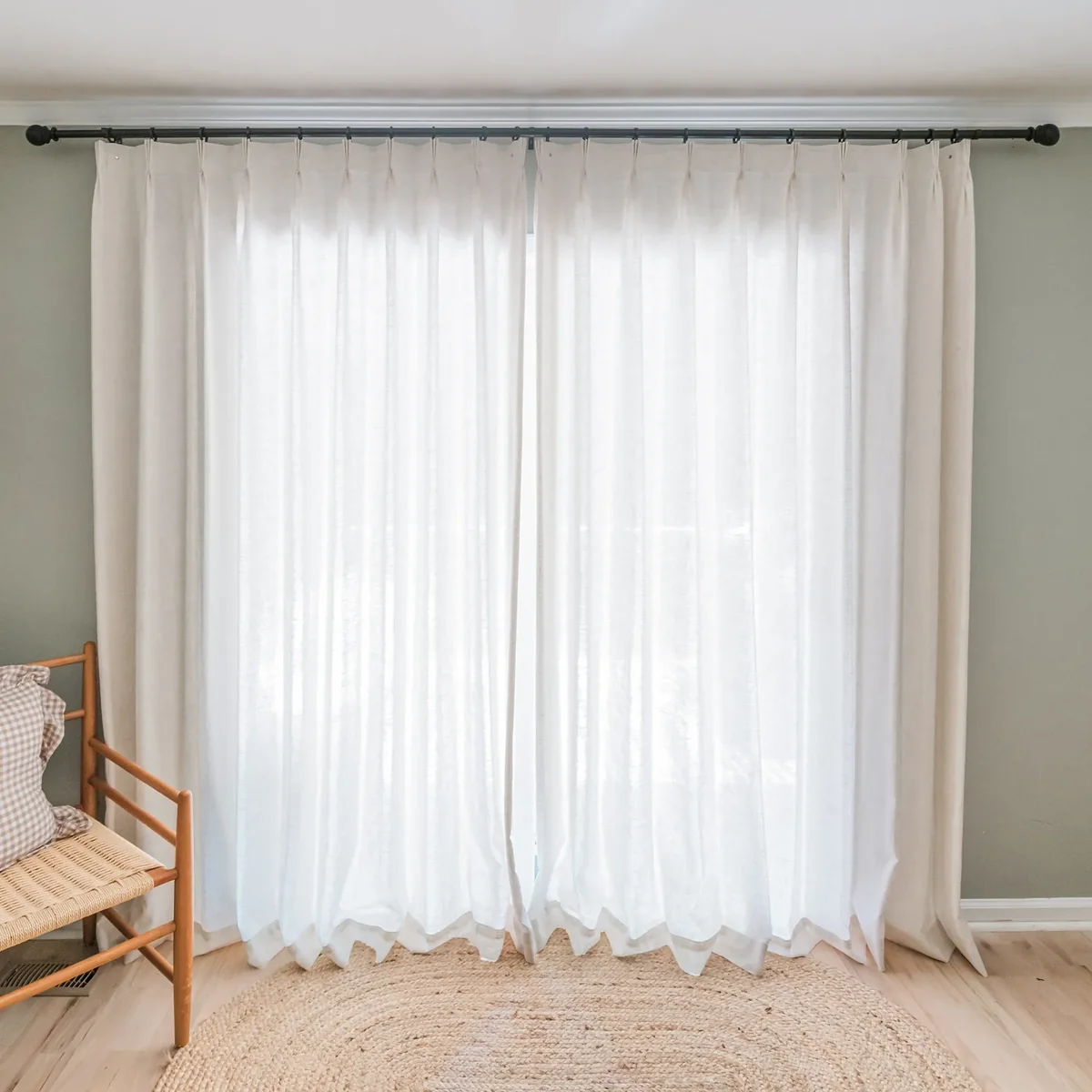
Create softer daylight with the right sheer curtains. Learn about fabric, privacy, colour, fullness, layering, hardware and care before choosing your window treatment.
Sheer curtains can make a room feel softer without closing it off from daylight. They create a light layer between the glass and the interior, soften the view of the window and help you adjust how exposed the room feels during the day. For many homes, their greatest advantage is flexibility: they can remain across the window while the main curtains are drawn back.
Choosing sheers is not just a decision between white and cream. Fabric openness, texture, fullness, heading, mounting and the light outside all affect the result. This guide explains how to choose sheer curtains in Kenya for living rooms, dining rooms, bedrooms and other suitable spaces. Start with the curtain collection and compare individual fabric specifications before ordering.
What a sheer curtain does
A sheer is a relatively translucent curtain that allows some daylight through its fabric. The amount of light and visibility varies by weave, colour, density and how the fabric is gathered. A very open sheer can look airy while revealing more of the view beyond it. A denser option may provide more screening but also soften the daylight more noticeably.
Sheers are useful where you want the window dressed without the effect of a closed opaque curtain. They can soften a hard-looking opening, create a consistent background behind main curtains and reduce the sense of exposure from uncovered glass. However, they should not be described as a complete privacy or glare-control solution without considering the particular room.
If the main problem is strong direct light or a need for substantial room darkening, consider the role of a separate main curtain. The blackout curtain guide explains the difference between light filtering and stronger light reduction. The two types can work together rather than compete as alternatives.
Understand privacy before choosing the fabric
The privacy effect of a sheer depends partly on the difference in brightness between indoors and outdoors. A room may feel screened during a bright day yet become much more visible after dark when interior lights are switched on. Viewing angle, distance and the openness of the fabric also matter.
For that reason, do not rely on sheers alone where night-time privacy is essential. Add a suitable main curtain or another appropriate opaque window covering. This is particularly relevant for bedrooms and living rooms facing a road, shared courtyard, neighbouring balcony or common walkway. A decorative sheer should not create false confidence about visibility.
Where practical, assess a sample against the actual window and check from the relevant outside viewpoint without trespassing or compromising safety. Examine the effect during the day and in the evening. Product photography rarely reproduces your precise lighting conditions, and an image of a sheer against a plain wall does not demonstrate its privacy performance.
Voile and other sheer fabric descriptions
Voile is a common term in sheer-curtain descriptions, but it does not tell you everything about fibre composition or care. Ask for the actual fabric details. A smooth voile-style fabric, a linen-look weave and an embroidered sheer can differ considerably in texture, transparency, drape and maintenance requirements.
Linen-look is an appearance description, not proof that the fabric is made from linen. Similarly, a soft or silky feel does not establish fibre content. If composition matters to your purchase, have it confirmed in the specification. This helps you understand the material and follow appropriate cleaning instructions later.
Consider how the fabric looks at different distances. A fine weave may read as almost plain across a large room, while an embroidered pattern can become a prominent decorative element. View the material in folds as well as flat. The gathered fabric will generally appear different from a single stretched sample held up to the light.
A current sheer curtain price example
The Diani Breeze Sheer Curtains listing displayed KSh 4,500 when checked on 21 September 2026. It describes a white lightweight voile layer for living and dining rooms. Use this as a specific catalogue reference, not as a national average or a guaranteed quote for your window.
Confirm the supplied quantity, finished dimensions, heading and current availability before purchasing. The displayed price should not automatically be read as a per-metre rate, a pair price or a complete installed cost. Larger openings, different headings, additional fabric and hardware can change the specification and quotation.
For budgeting, separate the sheer itself from stitching or alterations, the support system, hooks or rings, delivery and installation. If you are buying main curtains at the same time, ask for both layers to be itemised. The curtain pricing guide explains how to compare these components fairly.
Choose white, ivory or another shade thoughtfully
White sheers can create a clean-looking layer, but not every white has the same undertone. A cool white may look sharp beside warm cream walls, while an ivory sheer may appear yellow against a very cool interior. Compare the sample with the surfaces that will remain in the room rather than judging it on its own.
A slightly warmer neutral can work well with timber, earthy colours or warm-toned main curtains. A cooler shade may coordinate with a different palette. These are design possibilities, not fixed rules. Your room's daylight and lamps will affect the perceived colour, so view the fabric in both conditions before deciding.
Coloured or patterned sheers can be attractive where they are a deliberate part of the scheme. Remember that a large area of tinted fabric can influence the visual atmosphere of the window. If you want the main curtains or furnishings to be the focus, a quieter sheer may be easier to coordinate over time.
Plan a layered window treatment
The usual layered arrangement places the sheer nearer the glass and the main curtain towards the room. This allows the front curtain to open while the sheer stays closed. Each layer should be able to move on its own, giving you different combinations of daylight, view and privacy throughout the day.
The hardware needs to support that arrangement. A double curtain rod may suit compatible headings, while separate curtain tracks can provide another approach. Confirm the mounting depth and space between layers so the fabrics do not rub or push against each other.
Also check window handles, door movement and any deep sill. The rear layer should not be trapped by projecting fittings. The front layer should have room to form its intended folds. A layered installation is most successful when the two fabrics, their headings and the support system are specified together.
Measure the opening and the intended installation
Before ordering, agree where the rod or track will be mounted and how wide the finished installation will extend. Measure the intended coverage, not only the glass. Record any limits created by adjoining walls, furniture or doors. If the hardware already exists, give its usable span and details of the hanging system.
The curtain drop should be measured from the correct attachment point for the chosen heading. Eyelets, rings, hooks and track gliders do not all share the same starting point. If you are unsure, ask for measuring instructions or professional measurement before finalising the order. Small differences can be obvious on a long, lightweight curtain.
Measure at several positions where the floor or ceiling is uneven. Decide whether the sheer should clear the floor or finish another way appropriate to the room. A busy balcony doorway may call for a more practical clearance than a decorative window that is rarely approached. Record the agreed finished dimensions clearly.
Fullness changes the appearance of sheers
A sheer stretched flat across a wide window will not look like a softly gathered installation. Fullness provides the extra fabric that forms folds. It also changes the visual density of the fabric, so the same sheer may appear more transparent with less gathering and more layered when gathered more closely.
As a simple illustration, twice fullness over a 2-metre track corresponds to about 4 metres of combined flat curtain width before construction allowances. The actual ratio depends on the fabric, heading and intended appearance. This example is not a fabric cutting instruction, because material width, seams, hems and pattern direction still need to be considered.
Ask the maker to show the proposed fullness and explain how the supplied measurements are expressed. For ready-made products, check whether the stated width is per panel or for the complete pair. For custom work, record the intended track coverage and finished result so the quotation is based on the correct amount of material.
Choose the heading and hardware together
A heading controls how the sheer gathers and connects to the support system. Some arrangements use hooks and gliders on tracks; others use rings or compatible eyelets on rods. The best choice depends on the desired appearance, ease of movement and the other curtain layer, if one is being installed.
A discreet track can keep the focus on the fabric, while a visible rod becomes part of the room's decoration. If the sheer sits behind heavier curtains, make sure both systems work without interference. Check that supports, finials and brackets do not prevent the panels from opening to the position you need.
Even lightweight sheers require secure installation. The appropriate fixing depends on the wall or ceiling surface, not simply the weight of the fabric. Ask the installer to assess the mounting position and follow the hardware instructions. If you rent the property, check what alterations are permitted before new holes are drilled.
Use sheers differently in different rooms
In a living room, sheers can soften daylight and form a consistent background behind the main curtains. Consider the television position and any strong direct light. If a sheer does not provide enough glare control, the solution may involve the main curtain rather than choosing an increasingly dense sheer that undermines the airy effect you wanted.
In a dining room, think about how the window looks during daytime meals and evening use. A fabric that coordinates with nearby living-room windows can connect an open-plan space without requiring exactly the same main curtain everywhere. Keep the practical privacy requirement in mind if the room faces neighbouring properties.
In a bedroom, treat sheers as a daylight layer rather than the only covering when night-time privacy or substantial darkness is required. In a room with a frequently used balcony door, prioritise smooth movement and adequate stacking space. The living-room guide offers more ideas for balancing appearance and daily use.
Cleaning and maintenance
Follow the care instructions for the specific fabric. Do not assume every sheer can be machine washed simply because it is lightweight. Embroidery, trims, fibre blends and finishing treatments can change the recommended method. Remove or secure hardware as directed, and avoid handling delicate fabric roughly when taking it down.
Where washing is permitted, follow the specified temperature and process rather than using an aggressive general laundry cycle. Avoid unapproved bleach, strong chemicals and high heat. If pressing or steaming is allowed, use the recommended setting and test cautiously. An attractive sheer can be damaged by care intended for a different textile.
Check for snags around hooks, rings and rough edges. Smooth movement reduces unnecessary pulling on the fabric. Keep the product reference and care information so future cleaning decisions are based on the actual material. Ask the supplier if the label is missing rather than relying on a generic online cleaning recipe.
Common buying mistakes to avoid
The first mistake is assuming that a sheer guarantees privacy at every hour. The second is comparing prices without checking dimensions and panel quantity. Another is choosing a beautiful fabric before discovering that the existing hardware cannot accommodate a second layer. These problems are easier to avoid during planning than after the curtains arrive.
Do not overlook the main curtain when selecting the sheer. Place samples together and check whether their colours and textures complement each other. An overly busy combination can make the window feel crowded, while two nearly matching whites with different undertones can look accidental. There is no need for every fabric to be identical, but the relationship should feel deliberate.
Finally, avoid ordering from approximate visual guesses. A curtain that is too short or too narrow cannot always be corrected neatly. Confirm measurements, heading, finished drop, fullness, cleaning requirements and included accessories in writing. This is especially important for custom-made work where fabric is cut to your specification.
Request the right sheer for your space
Send Curtains Kenya photographs of the room, approximate window or track dimensions, your preferred colour and details of any existing main curtains. Explain whether your priority is softened daylight, a decorative layer or daytime screening. Include the installation location and whether new rods or tracks are required.
Use the contact page to confirm available fabrics and request a complete quotation. A well-chosen sheer should work with the light, the room and the supporting hardware. The result is a window treatment that looks considered while remaining easy to use, layer and maintain.
Helpful answers
Frequently asked questions
What are sheer curtains used for?
Sheers filter daylight and soften the appearance of a window while allowing some light through. They are commonly used alone where limited screening is sufficient or behind main curtains for a flexible layered arrangement.
Do sheer curtains give privacy?
Privacy depends on the fabric, lighting and viewing angle. Sheers may provide daytime screening, but they should not be relied on for night-time privacy when the interior is brighter than outside.
How much are sheer curtains in Kenya?
Prices vary with fabric, dimensions, heading and included work. The Diani Breeze Sheer Curtains listing displayed KSh 4,500 on 21 September 2026. Confirm the current price, panel quantity and dimensions; it is not a universal per-metre or installed rate.
Can I pair sheers with blackout curtains?
Yes. Use compatible double rods or separate tracks so each layer can move independently. Confirm the mounting depth, curtain weight and clearance around handles and other obstacles.
What colour sheers should I choose?
White, ivory and other light neutrals create different effects. Compare samples beside the walls, flooring and main curtains in daylight and evening light. Choose the undertone that fits your room rather than relying on a screen image.
How should sheer curtains be cleaned?
Follow the specific fabric care label. Some sheers can be washed gently, while others need a different method. Remove incompatible hardware before cleaning and avoid unapproved heat, bleach or vigorous handling.