Blinds & Window Treatments
Blinds vs Curtains in Kenya: Which Should You Choose?
Compare blinds and curtains for Kenyan homes and offices: privacy, light control, cost, cleaning and room suitability, with advice on combining both.
Choosing between blinds and curtains starts with how you use the room. A bedroom needs privacy and dependable light control. A living room may need soft daylight and a decorative finish. An office needs comfortable screen visibility and window coverings that are easy to operate throughout the day.
Blinds suit spaces where you want a compact finish and adjustable light control. Curtains suit rooms where fabric, fullness and layering are central to the design. You can also combine them: a blind handles everyday window coverage while curtains frame the room.
This guide compares the practical trade-offs so you can choose by room, window and budget. If you are still learning the different systems, start with our window blinds buying guide.
Blinds vs curtains at a glance
Consideration | Blinds | Curtains |
|---|---|---|
Appearance | Compact, with fabric panels or adjustable slats | Soft, decorative and available in different fullness levels |
Light adjustment | Roll, tilt or align fabric bands, depending on the system | Draw panels open or closed; add sheers for another layer |
Privacy | Depends on fabric opacity, slat position and gaps | Depends on fabric, lining and overlap |
Room darkening | Blackout fabric helps; perimeter gaps still matter | Opaque lining helps; coverage above and beside the window matters |
Space required | Often fits near or inside the window opening | Needs space for the track or pole and gathered fabric |
Cleaning | Dusting and material-specific spot cleaning | Washing or professional cleaning according to the care label |
Cost | Size, mechanism, material and fitting affect the quote | Fabric quantity, lining, heading, hardware and fitting affect the quote |
Which gives better light control?
The type of blind or curtain matters more than the category name. A sheer curtain and a blackout curtain serve different purposes, just as a sunscreen roller and an opaque roller do.
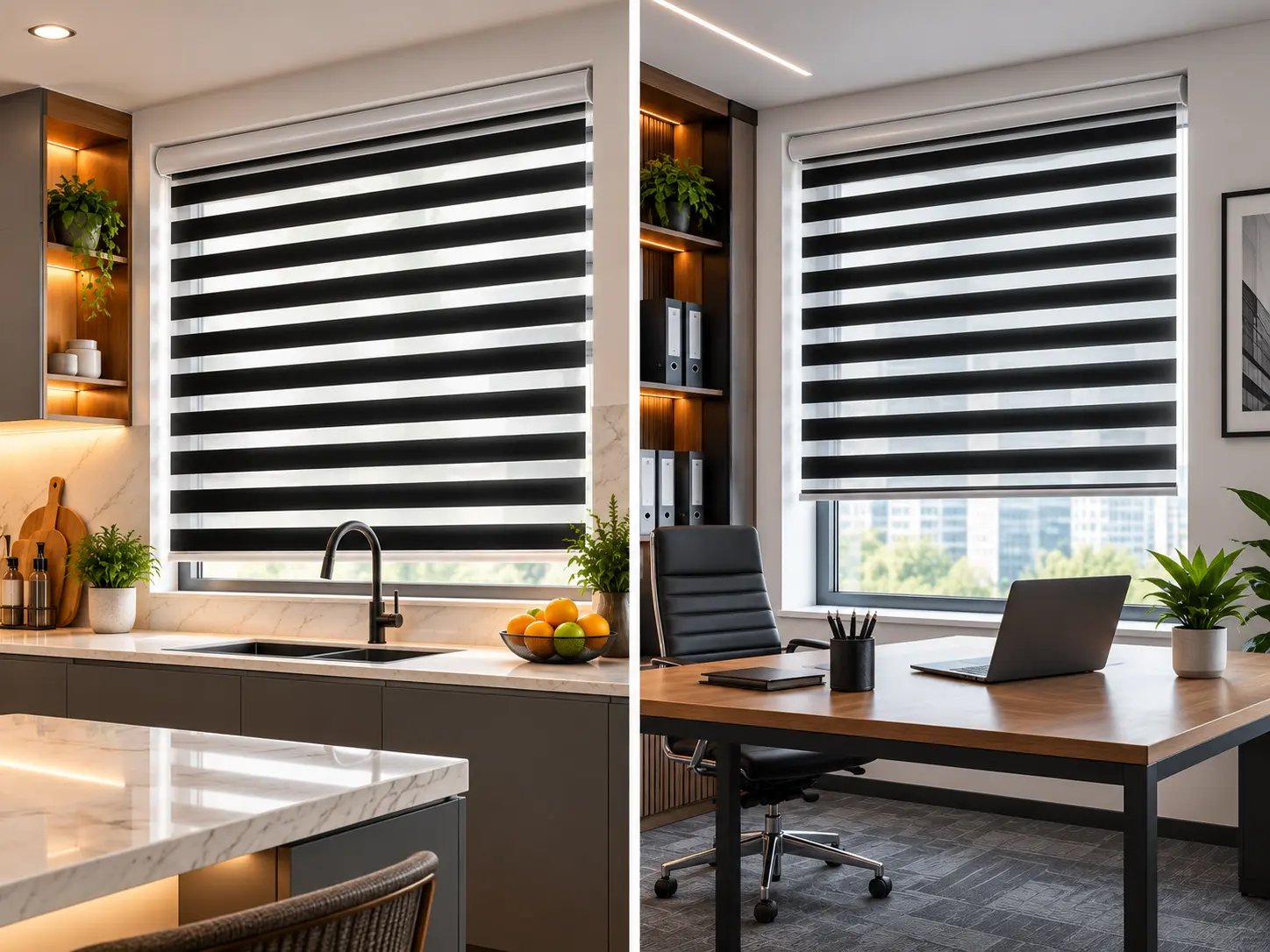
Venetian blinds let you tilt horizontal slats to change the direction of daylight. Vertical blinds offer a similar adjustment with upright slats. Roller blinds raise and lower as a continuous panel, so their fabric choice is especially important. Zebra blinds adjust the alignment of sheer and opaque bands.
For a simple fabric panel, compare the options in our roller blinds cost and fabric guide. If adjustable bands appeal to you, our zebra blinds buying guide explains their privacy and light-control limitations.
Curtains offer a different kind of flexibility. Sheers can soften daylight while heavier panels stay open. Closing the heavier layer provides stronger coverage. This arrangement requires space for both layers and separate tracks or a suitable double pole.
Which provides better privacy?
Neither option guarantees privacy simply because it covers the glass. Sheer materials can reveal silhouettes, particularly when the room is brighter than outside. Slatted blinds can leave sightlines depending on their angle and the position of a neighbouring window.
For street-facing rooms, inspect a fabric sample against light and discuss how the covering will behave at night. Consider the whole window: side gaps, the centre opening between curtain panels, and windows overlooked from above.
Opaque curtains or appropriately specified blinds can provide stronger coverage than sheers alone. Where privacy is essential, select the material and installation together rather than relying on a product name such as “day and night.”
Blinds or curtains for a dark bedroom?
Both can work, but blackout fabric and a fully dark room are different things. Light may enter around a blind's edges, above a curtain rail or between curtain panels. The surrounding window and installation determine how much of that light remains visible.
A blackout roller blind creates a compact finish. Curtains with opaque lining and adequate overlap can cover a wider area around the opening. Combining the two can improve coverage, although the final result still depends on fitting and other light sources.
Compare the fitting considerations in our blackout blinds guide with the fabric and lining choices in our blackout curtains buying guide. Tell the installer whether you want reduced morning light or a much darker room for daytime sleep.
Are blinds cheaper than curtains in Kenya?
There is no universal price winner. A basic blind can cost less than a heavily lined curtain treatment, while a premium blind system can cost more than straightforward curtains. Compare complete fitted quotes for the same window and performance requirements.
Blind quotations may use square metres or a complete-unit price. Curtain quotations may separate fabric, lining, stitching, tracks and installation. A fabric price per metre cannot be compared directly with a blind price per square metre.
Give each supplier the same window dimensions and room requirements.
Specify whether you need sheer, light-filtering or blackout coverage.
Ask for hardware, fitting, delivery and applicable taxes to be identified.
Check minimum charges and whether final measurements may change the price.
For layered treatments, include both systems in the budget.
Use our window blinds price guide and curtain prices in Kenya guide to understand the cost factors before requesting a quotation. Your own measurements and selected specification should determine the final price.
Choosing by room
Living rooms
Curtains are a good starting point when you want fabric to be a prominent design feature. Full-length panels can frame a window and coordinate with upholstery. Blinds are useful when you prefer an uncluttered opening or have furniture directly beneath the sill.
For a layered living room, use a blind for everyday coverage and curtains for texture. Check that the curtain fabric can move freely without catching the blind controls or window handles. Our living room curtains guide offers a starting point for fabric and styling choices.
Bedrooms
Prioritise nighttime privacy, light around the edges and ease of daily operation. Avoid choosing purely by colour. Request samples of the actual fabric or lining, and discuss the mounting position before the order is made.
Offices and home workspaces
Think about glare on screens, access to windows and how different people will operate the coverings. Slatted systems allow directional adjustment, while roller systems offer a simple appearance. Curtains can suit a home office where a softer residential finish is preferred.
Our guide to office blinds in Kenya covers options for workspaces. For horizontal slats, review the material choices in our Venetian blinds buying guide.
Kitchens and bathrooms
Choose a material explicitly suitable for the moisture, splashes and cleaning it will face. A wipeable surface can be practical, but not every blind fabric or wooden finish tolerates damp conditions. Keep any window covering clear of cooking heat and follow the product's care guidance.
Large windows and sliding doors
Check where the covering stacks when open and whether it obstructs the doorway. Curtains need room for gathered panels. Vertical blinds need space for the drawn slats, and their opening direction should suit the door. Wide roller installations may need separate units, depending on the system's size limits.
Our vertical blinds guide for wide windows explains the measurements and fitting questions to raise before ordering.
Cleaning and ongoing maintenance
Blinds are not automatically maintenance-free. Slats collect dust, fabric panels may stain, and moving parts need careful handling. Use the manufacturer's method rather than soaking a blind or applying a strong cleaner without checking compatibility.
Curtains also vary. Some fabrics can be washed, while others need professional cleaning. Linings and trims may have different care requirements from the face fabric. Before choosing either option, ask how it is cleaned and whether parts or individual panels can be replaced.
Can you combine blinds and curtains?
Yes. This is useful when you want the practical coverage of a blind and the appearance of curtains. Plan both at the measurement stage so the mounting positions, brackets, curtain stack and controls work together.
A neutral roller behind decorative curtains is one straightforward combination. For stronger bedroom light control, an opaque blind with lined curtains may be appropriate. Avoid adding layers without a purpose: extra fabric and hardware also increase cost and cleaning.
What to check before ordering
Identify your priority. Decide whether privacy, daylight, darkness or appearance matters most.
Check the opening. Note handles, inward-opening windows, door access and available mounting depth.
Inspect samples. Review colour, texture and transparency in the room where they will be used.
Compare complete quotes. Include the selected material, hardware, installation and any second layer.
Confirm the fit. Have final dimensions and mounting details checked before custom production.
Learn about our curtain, blind and rail installation services when planning the fitting. For a quotation, contact Curtains Kenya with your location, approximate window sizes and the rooms you are furnishing.
Helpful answers
Frequently asked questions
Are blinds better than curtains for a small room?
Blinds can keep the window area compact, especially near furniture. Curtains can also work when the track and fabric stack are planned carefully. Check usable space rather than choosing solely by room size.
Can sheer curtains provide privacy at night?
Do not rely on sheers alone for nighttime privacy. Visibility depends on the fabric and lighting, and a bright room may be visible from outside. Add an opaque layer where privacy is needed.
Which is easier to clean: blinds or curtains?
It depends on the material. Some blinds can be dusted or wiped, while some curtain fabrics can be washed. Check the actual care instructions and how easily the covering can be removed or serviced.
Do blackout blinds make curtains unnecessary?
They may meet your needs on their own. Curtains can add decoration and coverage around the opening, but are optional. Assess the fitted blind’s edge gaps and your desired room darkness.
Should every room use the same window covering?
No. You can coordinate colours while choosing different systems for different rooms. A bedroom’s light-control needs may differ from those of a kitchen or office.
Can I get a quote before professional measurement?
Approximate measurements can support an initial estimate. Confirm final dimensions, material choices and mounting requirements before ordering a custom treatment.