
Blinds & Window Treatments
Zebra vs Roller Blinds in Kenya: Which Should You Choose?
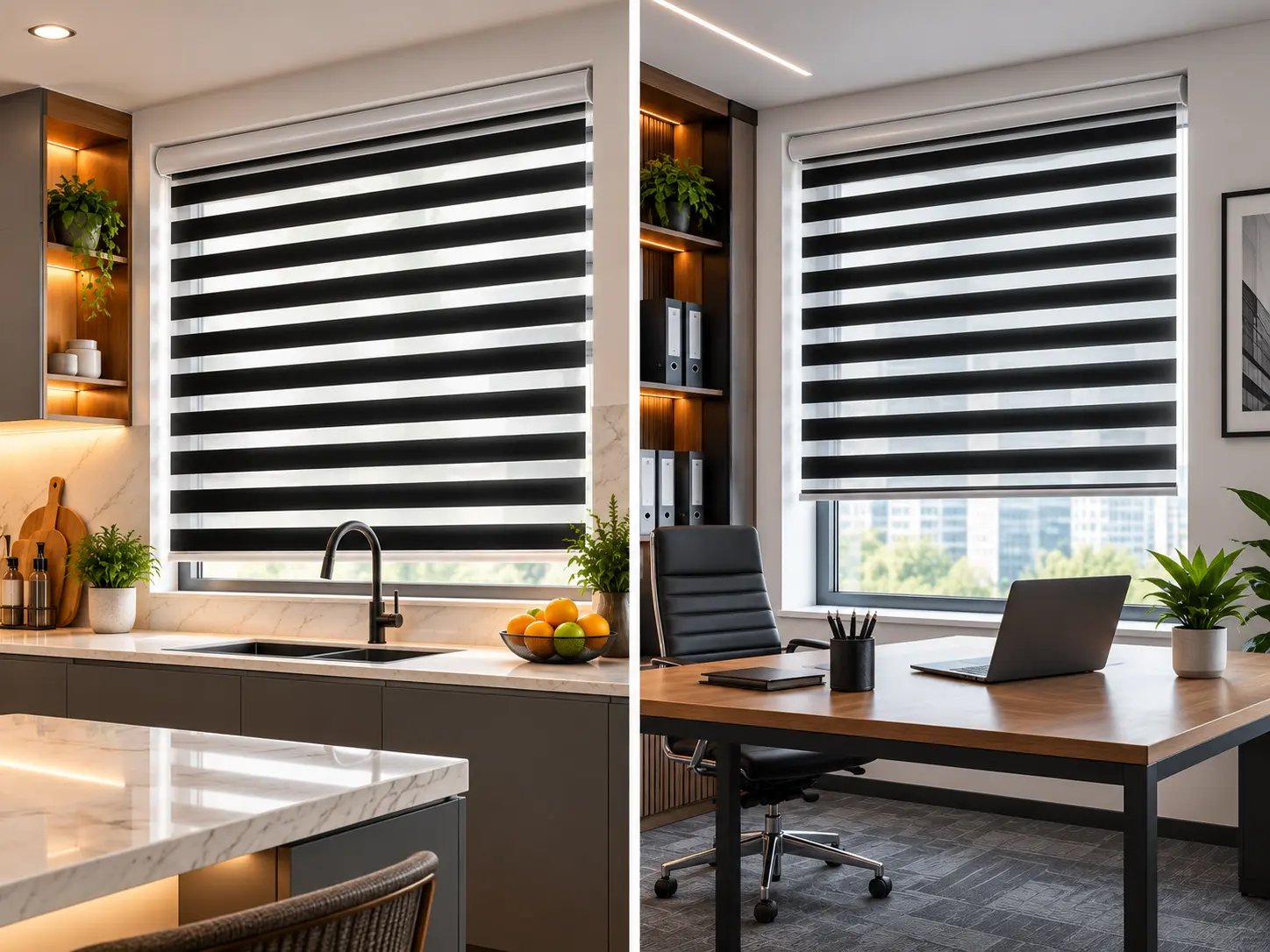
Compare zebra and roller blinds for Kenyan homes and offices: light control, privacy, blackout, costs, maintenance and installation, with practical buying advice.
Zebra and roller blinds both offer a compact alternative to curtains, but they manage daylight differently. Zebra blinds adjust alternating sheer and solid fabric bands. A conventional roller blind raises or lowers one continuous panel, with its fabric determining how much light passes through.
Choose zebra blinds when you like the striped appearance and want to adjust daylight while keeping fabric across the window. Consider a conventional roller when you prefer a plain surface or have a specific requirement such as sunscreen filtering or blackout fabric.
This guide compares privacy, light control, cost, maintenance and fitting for homes and offices in Kenya. For other styles, see our window blinds buying guide.
Zebra vs roller blinds at a glance
Feature | Zebra blinds | Conventional roller blinds |
|---|---|---|
Fabric design | Alternating sheer and solid bands | One continuous fabric panel |
Daylight adjustment | Change the alignment of layered bands | Raise or lower the panel; fabric controls filtering |
Appearance | Visible horizontal pattern | Plain or patterned continuous surface |
Privacy | Depends on band alignment, material and viewing angle | Depends on fabric opacity and edge gaps |
Bedroom darkness | Assess the complete system; do not assume blackout | Blackout fabric is an option; fitting gaps still matter |
Cleaning | Layered fabric and delicate sheer sections | One main fabric panel; care depends on material |
Cost | Fabric, dimensions and mechanism determine price | Fabric, dimensions and mechanism determine price |
How zebra blinds work
Zebra blinds use banded fabric arranged in layers. Adjusting the relative position of those layers changes whether sheer sections line up or are covered by the solid bands. This allows a change in daylight without exposing the window in the same way as raising a conventional roller.
They are also called banded or day-and-night blinds. Those names describe the style; they do not guarantee complete darkness or privacy in every lighting condition. Ask to see a working sample in both the open-band and closed-band positions.
Hunter Douglas's zebra shades guide explains the banded design and distinguishes it from two separate roller shades. Browse our zebra blinds collection when comparing this style.
How conventional roller blinds work
A conventional roller blind winds a continuous fabric panel around a tube above the window. Lowering it covers the opening; raising it reveals the glass. The fabric does not change transparency as you operate the blind.
This makes material selection important. A sunscreen fabric filters daylight and retains some view. A light-filtering fabric provides a different balance of brightness and privacy. An opaque blackout fabric blocks light through the material, although light can still enter around the installation.
Our blackout vs sunscreen roller blinds comparison explains those choices. You can also browse the roller blinds collection before requesting fabric samples.
Which gives better daytime light control?
Zebra blinds are useful when you want to switch between more open and more covered fabric bands while leaving the window largely covered. This can suit a living room where the preferred amount of daylight changes during the day.
A conventional roller provides adjustment through height and fabric choice. A screen roller can stay lowered while filtering daylight; an opaque roller admits daylight through the uncovered part of the window when raised. Neither approach is automatically better for every room.
Try the sample from the position where you will sit or work. Check whether the remaining light creates glare, whether the view matters and whether the striped pattern suits the room. For a workstation, assess the result at the screen as well as at the window.
Are zebra blinds better for privacy?
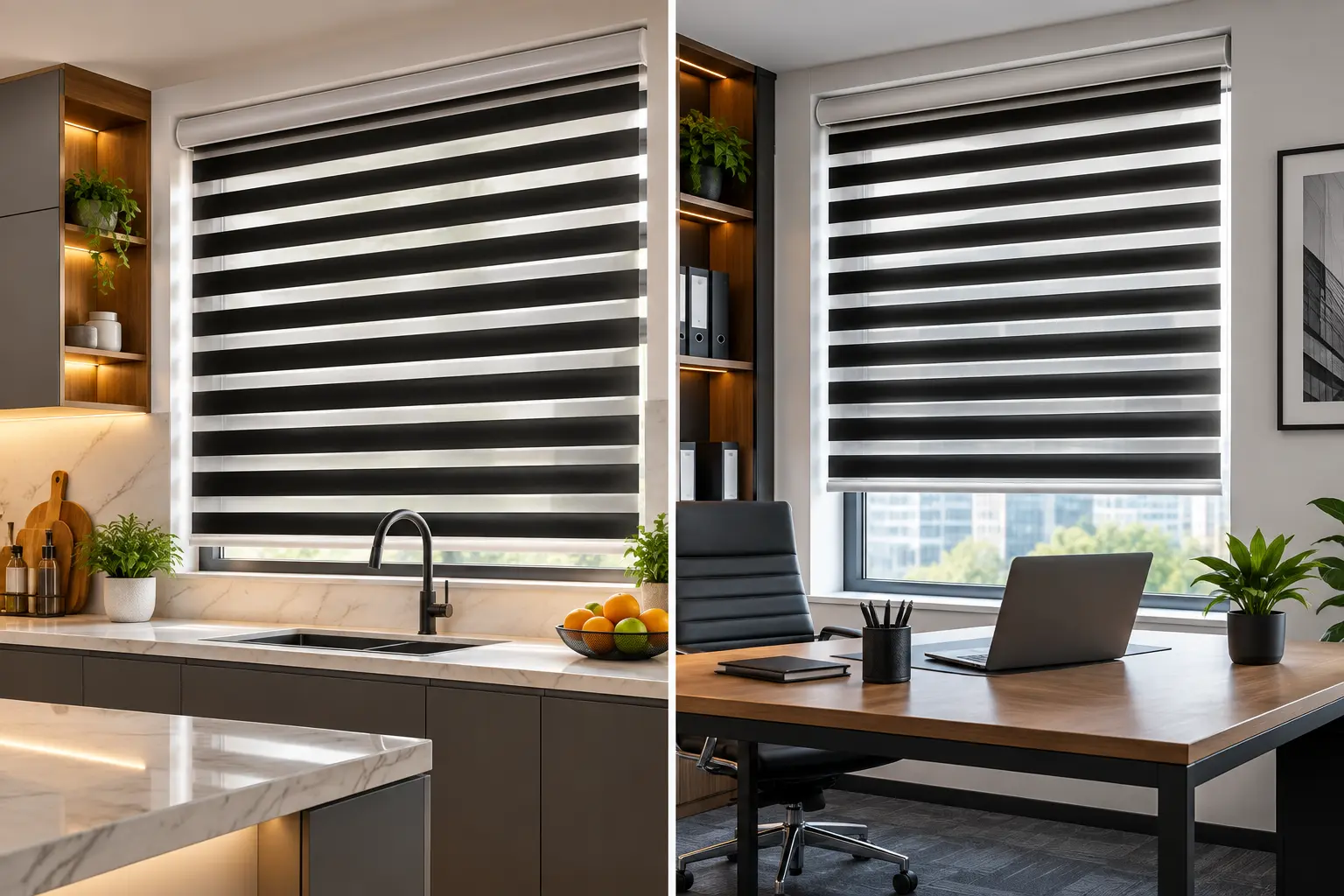
Closing the band alignment can improve coverage compared with the sheer-aligned position, but privacy depends on the actual fabric and system. Check viewing angles and gaps, especially in an apartment overlooked by nearby buildings.
A sheer section should not be treated as an opaque barrier. At night, when the room is brighter than outdoors, visibility may differ from what you observed in daylight. Request a demonstration or assess an appropriate sample under similar lighting before choosing for a bedroom.
Conventional rollers also vary: sunscreen and sheer fabrics should not be assumed to provide nighttime privacy. If privacy is the main priority, compare an opaque roller with the closed position of the proposed zebra blind, including coverage at the edges.
Which is better for bedrooms and blackout?
A conventional roller with specified blackout fabric is a straightforward option when reducing incoming light is the main objective. It provides a continuous opaque surface, but the installer must still address light around the sides, top and bottom.
Do not assume a zebra blind will produce the same result because its solid bands are described as room-darkening. Ask what the complete fitted system can achieve, rather than relying on the fabric name alone. The band's overlap, surrounding gaps and other light sources affect the room.
Read our blackout blinds cost and fitting guide when planning a bedroom. If you want decorative curtains as a second layer, our blinds vs curtains comparison explains the additional space and hardware to consider.
Zebra blinds are different from dual roller blinds
A zebra blind uses layered bands to change light transmission. A dual roller arrangement uses two independently operated fabric rolls, such as a sunscreen layer and a blackout layer.
If you want filtered daylight during work hours and opaque coverage at night, compare both arrangements. Ask for the quotation to identify the exact system: “day and night” can be used loosely, so it is better to confirm how many fabric rolls operate independently.
Two rollers may need more mounting depth and additional hardware. Check the space above the opening, handles and control positions before ordering. Do not assume a bracket designed for one system will accept another.
Choosing for living rooms and offices
Living rooms
Zebra blinds can become a visible design feature through their horizontal bands. A plain roller can create a quieter background where curtains, furniture or wall finishes already carry a strong pattern. Compare a reasonably sized fabric sample with the room's other materials.
For neighbouring windows, ask how the zebra bands will align once installed. Differences in window height or mounting position can affect the appearance. Agree on the intended arrangement before production rather than expecting every stripe to line up automatically.
Offices and home workspaces
Start with glare, privacy and how often people adjust the blinds. Zebra can provide convenient band adjustment, while a conventional screen roller offers a continuous filtering surface. A presentation room may need stronger light reduction than an ordinary desk area.
Our office blinds guide covers options for different workspaces. For very wide openings or frequent door access, also consider the movement differences in our roller vs vertical blinds comparison.
Are zebra blinds more expensive than roller blinds in Kenya?
There is no fixed price difference that applies to every product. A premium conventional roller can cost more than a simpler zebra system, and fabric, controls and dimensions can change the comparison. Request quotations for the same windows and agreed performance requirements.
Compare our zebra blinds price guide with the roller blinds price guide to understand the main quotation factors. Treat a market example as background rather than the final price for your installation.
Confirm whether the price is per square metre or per complete blind.
Identify the fabric, colour, opacity and operating mechanism.
Check the number of units needed for wide windows.
Ask whether brackets, fitting, delivery and applicable taxes are included.
Separate optional cassettes, motors or additional layers from the base price.
Cleaning and maintenance
Follow the care instructions for the selected fabric. Zebra's sheer sections and layered construction require careful handling. Conventional roller fabrics also differ: a wipeable surface does not mean every stain remover or wet-cleaning method is suitable.
Avoid pulling on the fabric to operate either style. If it catches, rolls unevenly or no longer aligns correctly, ask for servicing rather than forcing it. Before buying, confirm what replacement fabrics, mechanisms or other parts the supplier can provide.
What to check before ordering
Decide on the main purpose: daylight adjustment, privacy, darkness or decoration.
Inspect a working sample: compare the fabric in different positions and lighting conditions.
Check the opening: note handles, inward-opening panes and available mounting depth.
Confirm coverage: ask about fabric width, edge gaps and joins between units.
Review the quote: approve the exact fabric, mechanism, fitting and inclusions.
Confirm final measurements: agree on the installation layout before custom production.
Learn about our blinds measurement and installation services when planning the fitting. To discuss your rooms, contact Curtains Kenya for a quotation with your location, approximate window sizes and the result you want.
Zebra blinds suit buyers who want adjustable banded light filtering and a striped finish. Conventional rollers suit buyers who prefer a continuous surface and a clearly specified fabric function. Choose the system that meets your room's requirements in its fitted form.
Helpful answers
Frequently asked questions
What is the difference between zebra and roller blinds?
Zebra blinds adjust alternating sheer and solid bands in layered fabric. A conventional roller raises or lowers one continuous panel, with its fabric determining how much light passes through.
Are zebra blinds the same as dual roller blinds?
No. Zebra blinds use layered fabric bands. A dual roller arrangement has two independently operated fabric rolls, often a sunscreen layer and an opaque layer. Confirm the exact system when requesting a quote.
Do zebra blinds provide complete privacy at night?
Do not assume complete privacy from the name alone. Band alignment, fabric opacity, viewing angle and gaps all matter. Inspect the closed position under relevant lighting and consider opaque coverage where privacy is essential.
Which is better for blackout: zebra or roller blinds?
A conventional roller with specified blackout fabric offers a continuous opaque surface, but perimeter gaps can still admit light. Assess a zebra system’s complete fitted performance rather than assuming room-darkening bands guarantee blackout.
Are zebra blinds always more expensive than roller blinds?
No. Fabric grade, mechanism, dimensions and fitting affect both prices. Compare complete quotations for the same windows and confirm installation, delivery and applicable taxes.
Can zebra blinds be used in an office?
Yes, where their daylight adjustment and appearance meet the room’s needs. Check glare at workstations and assess privacy. Presentation rooms may require stronger light control than ordinary desk areas.