
Curtain Buying Guides
Motorized Curtains in Kenya: Automatic and Smart Curtain Buying Guide
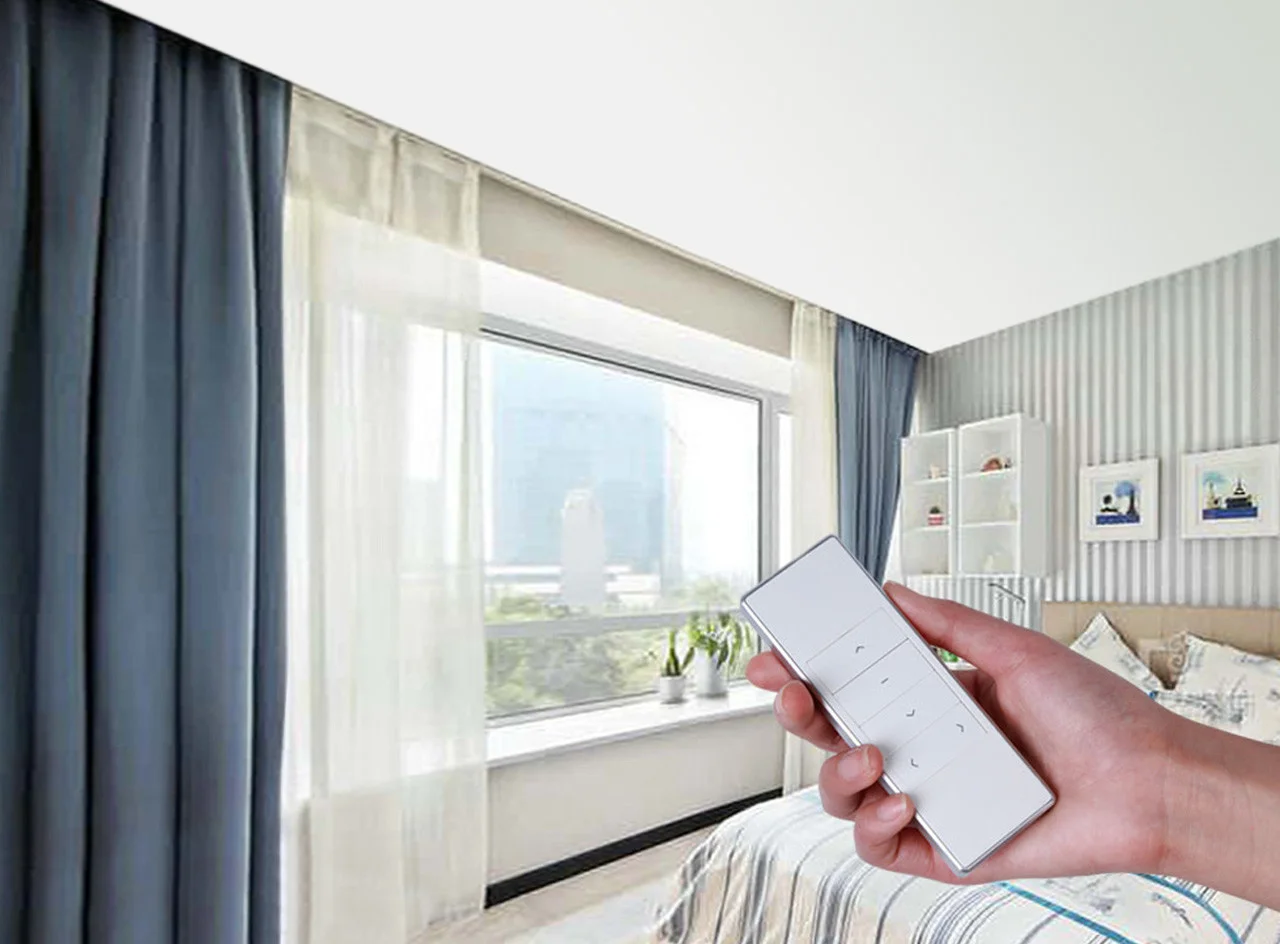
A motorized curtain order includes more than a motor. Use this guide to specify the track, fabric, power, controls and support needed for an automatic or smart arrangement.
Motorized curtains in Kenya can be considered when you want powered opening and closing, scheduled movement or integration with a connected home. These are related but different requirements. A remote-controlled curtain does not automatically include scheduling, app access or compatibility with the smart-home platform you already use.
This guide helps you prepare a complete system brief before comparing quotations. It covers the track, curtain panels, power, controls, installation and handover. Contact Curtains Kenya to confirm current availability and support for the arrangement you need. No particular motor brand, installation package or integration is promised by this general buying guide.
Define motorized, automatic and smart in practical terms
Begin by writing down the action you want. Opening curtains with a handheld control is different from opening them at a scheduled time or triggering them from another device. Ask the supplier to describe each proposed function in plain language and identify the component that enables it. This prevents a broad smart label from replacing a usable specification.
Manufacturer information shows why model details matter. Somfy’s Glydea range documentation distinguishes models and control features rather than treating every motor as identical. Use that as an example of the type of documentation to request for the system offered to you, not as evidence that Curtains Kenya supplies that brand.
Start with the window and curtain arrangement
Record the opening width, intended track position, drop and the direction in which the curtains should move. State whether you want a centre opening, one-sided movement or another arrangement. Include photographs showing walls, ceiling details, furniture and any balcony access. The system must work with the physical layout before connected features become relevant.
Use the measurement guide for the initial room record. Final system and making dimensions should be confirmed by the responsible supplier or installer. Do not order a motor based only on window width without checking track geometry, curtain construction and the complete installation requirements.
Confirm track compatibility before selecting a motor
Ask whether the proposal uses a complete motorized track or a retrofit device for an existing fitting. Identify the exact track or rod and obtain confirmation that the proposed components are compatible. Similar-looking fittings can have different construction and operating requirements, so a photograph alone may not settle the question.
Our track and rod guide explains the broader distinction. For a bay, curve or corner, ask whether the specific system supports that layout and what additional assessment is required. Do not assume that a standard straight-track proposal can be adapted without changing components or limits.
Specify the complete curtain weight and heading
The fabric, dimensions, gathering and lining contribute to the finished curtain arrangement. Ask the supplier to check the complete panel weight against the system’s stated limits, including any relevant conditions for track length or shape. Do not use the weight of a small fabric sample as a substitute for a system assessment.
The heading must also work with the selected track and attachment components. Our heading guide helps explain why this is part of the order. If you change to a heavier fabric or add lining later, have the system reassessed rather than assuming the original selection remains suitable.
Plan power before the room is finished
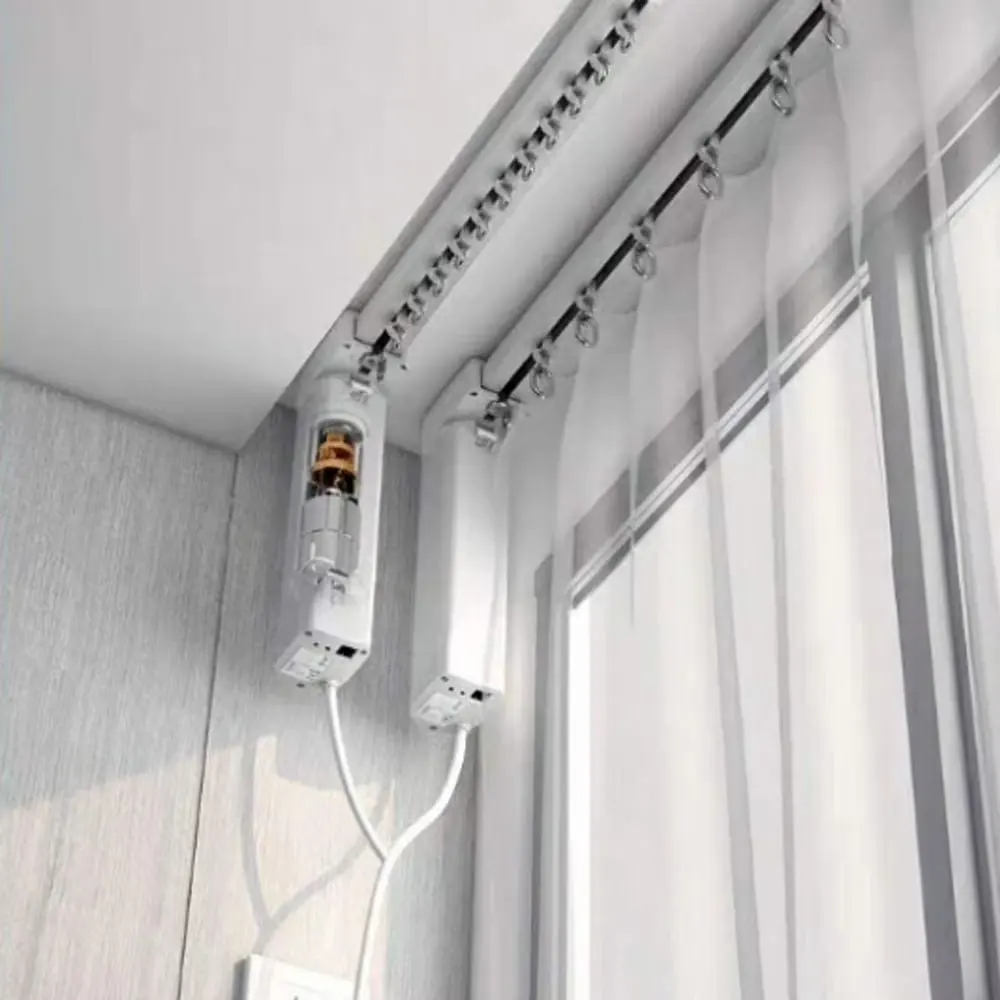
Ask which power arrangement the proposed model requires and where any connection, cable or charging access will be located. Confirm who is responsible for the necessary electrical work and whether it is included in the quotation. A clean-looking promotional image may not show the full power arrangement needed in your room.
Keep this at the planning level with the installer; do not improvise wiring from a general curtain guide. If the room is being renovated, coordinate the curtain system requirements before finishes make access difficult. If it is an existing room, discuss a practical route and appearance for the approved components without assuming they can be concealed everywhere.
Choose controls around everyday use
List who will operate the curtains and which controls they need. A household may prefer a simple local control even when an app is available. A guest room may need an obvious way to open and close the panels without access to the owner’s phone. Ask for the proposed control arrangement to be demonstrated before approving it.
Specify whether individual windows should operate separately or together and how that selection is made. Avoid adding functions merely because they appear in a catalogue. A useful system is one whose normal operation is clear to the people who will actually use the room.
Verify smart-home compatibility by exact model
If you want integration with another platform, provide its name and relevant device details and ask for written compatibility confirmation. Identify whether a separate hub, bridge, app account or other component is required. Do not assume that two products described as smart will communicate with each other without additional equipment or configuration.
Somfy’s motorized window-covering information is one manufacturer example of a broader system offering. For your order, request documentation for the exact proposed combination. Check which features are local and which depend on an external service, and ask who will support configuration questions after installation.
Ask what happens when something is unavailable
Discuss mains power loss, depleted batteries where relevant, loss of Wi-Fi and loss of internet as separate situations. Ask which controls continue working and what recovery steps are permitted. Manual operation may differ between systems, so follow the supplied instructions rather than forcing the curtain along the track.
Request a handover demonstration of the applicable procedures. Manufacturer installation instructions illustrate why operating and setup details belong to a specific model. Keep your own model’s manual accessible and confirm who to contact if the system stops responding.
Use schedules only where they fit the room
If scheduled movement is required, describe the intended routine rather than asking vaguely for automation. State which windows move, at what trigger and whether occupants need an easy way to override the action. Consider days when the room is used differently and how the schedule will be paused or changed.
Do not rely on a general claim that automatic curtains will deliver a fixed energy saving or another guaranteed outcome. The useful first step is a clear routine that the selected system supports. Ask the installer to show how that routine is configured and how the household can maintain it without repeatedly needing technical assistance.
Keep fabric performance separate from powered movement
A motor changes how the curtain moves; it does not by itself establish blackout, acoustic or thermal performance. Choose the material and fitted coverage according to the room’s needs. If you want darkness, discuss edge gaps and the centre join just as you would with a manually operated curtain.
Read the light-gap guide and blackout selection guide. For heavier panels, the heavy-curtain guide explains related planning questions. Keep any change in fabric or lining visible to the system supplier so compatibility can be checked.
Plan installation and commissioning as separate tasks
Ask who measures, supplies the track, installs the support, handles power arrangements and configures controls. If several people are involved, clarify responsibility for checking the complete result. A delivered box of components is different from an installed and demonstrated system, and the quotation should make that distinction clear.
The installation planning guide explains general scope questions. For locations outside Nairobi, confirm technical service coverage directly. Curtains Kenya’s preferred-courier delivery arrangement should not be treated as confirmation that a specialist installer is available in every destination.
Request a complete system quotation
List the track, motor, curtain panels, attachment components, controls, power items and any required connectivity equipment. Add installation, configuration and delivery where applicable. Ask for model references and the included documentation. A low motor-only price is not an equivalent comparison to a complete working system.
Our curtain price guide provides the general principle of comparing like-for-like specifications. For motorization, also clarify support arrangements, applicable warranty terms and any ongoing service requirements. Obtain those terms directly rather than assuming a general electronics promise applies to the complete curtain installation.
Use a practical handover checklist
At handover, check each window’s intended opening direction, full travel and stopping positions. Operate the agreed local controls and any connected functions. Ask the installer to explain normal use, permitted manual handling and the relevant loss-of-power procedure. Confirm how to change a schedule or disable one when the room routine changes.
Keep model references, manuals and support contacts with the order record. If accounts or apps are involved, ensure the appropriate household or business owner controls them and understands access management. Do not leave everyday use dependent on an installer’s personal account. Raise any missing function against the approved specification before treating the work as complete.
Prepare your motorized curtain enquiry
Send Curtains Kenya the room photographs, approximate dimensions, desired opening arrangement and a short list of required controls. State whether this is a new system or a retrofit and identify any existing smart-home platform. Ask the team to confirm suitable available options and the service scope that can be offered for your location.
For a Nairobi discussion, contact the team to confirm store directions and current hours. For another city or town, confirm product delivery and specialist installation separately. A clear brief allows the conversation to focus on a supported system instead of an attractive but incomplete collection of components.
Compare a simple remote system with a connected proposal
For an illustrative comparison, imagine two quotations for the same bedroom window. One offers powered movement from a local control. The other includes a connected arrangement intended to support an agreed schedule. Before comparing totals, check that the track, panel specification and installation scope are equivalent, then identify the additional components and setup included in the second option.
Ask yourself whether the extra function solves a routine you actually have. If you only want to avoid reaching across furniture, a different control requirement may be enough. If you need scheduled movement, ask the supplier to demonstrate that exact routine and explain how it is changed. Do not assume the more complicated proposal is automatically the better fit.
This example does not recommend a particular model or claim current availability. It shows how to keep requirements visible during the buying process. Record any feature removed from a revised quote, especially if a lower total follows the removal of a hub, control or configuration service. The final approved version should describe a complete arrangement that can perform the actions you have agreed, with a clear route for support if something does not work as demonstrated.
Helpful answers
Frequently asked questions
What is the difference between motorized, automatic and smart curtains?
Motorized describes powered movement. Automatic usually refers to operation triggered by a timer or other agreed condition. Smart generally adds a connected control or integration feature. Sellers may use the terms differently, so ask what the exact proposed system can do and which components are included.
Can an existing curtain be motorized?
Possibly, but the existing fabric, heading, track, opening arrangement and total weight must be assessed against the proposed system. Do not assume a motor can be attached to every rod or track. Request confirmation for the specific retrofit rather than relying on a generic compatibility claim.
Do smart curtains work during a power cut?
That depends on the exact system and its power arrangement. Ask what happens when mains power, a battery, Wi-Fi or internet connectivity is unavailable. Manual operation and backup features vary, so request a demonstration and instructions for the model actually supplied.
How much do motorized curtains cost in Kenya?
Request a complete quotation identifying the track, motor, fabric panels, power components, controls, any hub, installation and configuration. Window dimensions, weight and integration requirements affect the system specification. A standalone motor price is not the total for a working curtain arrangement.
Does Curtains Kenya supply smart curtain systems?
Contact Curtains Kenya to confirm current system availability, installer support and the specific models that can be quoted. This guide is a planning resource and does not claim a particular brand partnership or stocked system. Confirm service arrangements for your location before ordering.